Friday, April 10, 2009

Larry Summers: Maximizing Wealth with "One of the "Greatest Minds of the Past 500 Years"

Of the past 500 years? Really? Maximizing wealth? Whose? We'll get to all that. But first, will someone kindly send me something about Larry Summers that shows him in a better light than this godawful tedious CNBC clip of him fielding soft grounders about the economy before the Economic Club (of New York, I think) on 4/9. It SO reminds me of my undergrad days at Harvard in the 1960's and the smoke and mirrors political discussions that routinely marginalized outsider views as "generating more heat than light". (Anyone else remember this phrase?) This cozy CNBC clip suggests that the old boys' network is still in fine working order today, its nexus having merely migrated northwards to Cambridge from New Haven, from whence an unbroken string of Yale graduates (Bush/Clinton/Bush) had occupied the White House for an unprecedented 20 years. (My take on the historic "Yale succession" of U.S. Presidents is here, here, here and here.)
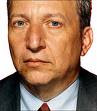
Well, I'm getting carried away. But seriously: are video clips like this one the best that CNBC - and Summers himself - can give the American people at this critical juncture in our history?

Well I gotta rant a bit more. Just listen to the long-winded introduction (suckup?) that consumes the first two minutes of this nine-minute clip, including the moderator's paean to Summer's astounding skills as a tennis player - "his greatest talent," says the host, confessing his own need for professional training in order to beat Summers - "barely" - on a doubles court. Please. This idle talk only assures Summers that he is among friends and will not be asked any hard questions (say, about bank solvency or bank spending of government bailout money). And the warm audience response to his not-so-witty dismissal of any claim to certainty in the making of economic forecasts confirms that none are expected. I decided to scout the web a bit on this man, focusing on his ties to Wall Street. It didn't take to find a couple interesting items:

  • At Econospeak (via Naked Capitalism) I found this glowing account of Summers' "stadium rock concert" and "performance art" presentation last year to Goldman Sachs. Smoke and Mirrors? For sure, it was patently a magic show. Genius? One of the greatest minds of the past 500 years? That was the take of one Monique, a Goldman employee who says “It was his entertainment that opened me up and made me receptive, but the economic vision was irreplaceable. I thought I was maximizing wealth before I heard Larry, but I didn’t know the half of it.” Maximizing wealth, huh? Whose? (4/4)

  • Well, consider this. The New York Times reports that "Lawrence H. Summers, the top economic adviser to President Obama, earned more than $5 million last year from the hedge fund D. E. Shaw and collected $2.7 million in speaking fees from Wall Street companies that received government bailout money, the White House disclosed Friday in releasing financial information about top officials." OK, so Summers, as Treasury Secretary, isn't pulling in the big bucks from Wall Street. But whose wealth he is maximizing? And who is benefitting from his great wisdom? So far, it's still going to Wall Street while the Americian people, on CNBS, get jargon. (4/3)
OK already, enough ranting. Here's a challenge, stemming from the 2nd sentence of the 2nd paragraph of the New York Times' brief bio of Larry Summers, which celebrates his "deep understanding of global economic issues, at a time when the American mortgage crisis has leaped borders to become a worldwide contagion." Whoah, hold it. Can anyone show that Summers had any prior understanding of this crisis before it hit full force in 2008? What was one the greatest minds of the past 500 years saying about it in 2006 and 2007?

Thursday, April 9, 2009

CNBC's Rick Santelli Fires off on the Solvency/Liquidity Issue

A good moment yesterday morning for the Great Santelli on CNBC's Squawkbox. Here it is. At 1:40 of the segment, which opens with Carl Quintanilla interviewing Umrai Gill, Santelli waves a paper and says he wants to take note of a recent white paper written by Harvard and Princeton economists Joshua Coval, Jakub Jurek and Erik Stafford. The conclusion he reads, however, is not from the Coval/Jurek/Stafford paper. It's from an article about the paper by John Carney of Business Insider. Carney writes (and Rick reads, revising the last sentence):
In short, the government cannot save the banks by improving liquidity or changing mark to market rules because the problem isn't illiquidity or accounting. The problem is that highly leveraged financial firms own assets that are worth far less than they thought they would be, and the firms are insolvent as a result. This is why the latest bailout plans secretly give huge subsidies to banks--because the only way to keep the insolvent zombies afloat is to transfer billions of dollars to banks, bank stockholders, and bank creditors.
This caught my attention. Umrai Gill's rejoinder to Santelli did too.

Saturday, April 4, 2009

Is Massive, truly MASSIVE, Bank Fraud going Unpunished and Unregulated?

Is America ignoring bank fraud on an unprecedented scale in its haste to bail out its apparently insolvent banks? This 20 minute Bill Moyers Journal video makes a strong case for the affirmative. Moyers interviews William K. Black, a senior regulator during the Savings and Loan Crisis of the 1990's. Black's take on the decay of American finance over the past 20 years reminds me of David Cay Johnston's take on the decay of the IRS since 1980. Two straight shooters. Black is hard on Geithner and Summers and on President Obama too. A key passage:
The FBI publicly warned, in September 2004 that there was an epidemic of mortgage fraud, that if it was allowed to continue it would produce a crisis at least as large as the Savings and Loan debacle. And that they were going to make sure that they didn't let that happen. So what goes wrong? After 9/11, the attacks, the Justice Department transfers 500 white-collar specialists in the FBI to national terrorism. Well, we can all understand that. But then, the Bush administration refused to replace the missing 500 agents. So even today, again, as you say, this crisis is 1000 times worse, perhaps, certainly 100 times worse, than the Savings and Loan crisis. There are one-fifth as many FBI agents as worked the Savings and Loan crisis.
So what needs to be done? Here's Black's 9/08 Nation article co-authored with economist James K. Galbraith. Here are some related links:
  • Tim Geithner outlines his regulatory plan before the House Committee on Financial Regulation (3/??)
  • President Obama backs up Geithner's plan (3/24)
  • The Economist says "The rich are an easy target. But when you try to bash them, you usually end up punching yourself in the nose." Seems to me this caution against political retribution skirts the hard issues of legal accountability and regulatory reform. (4/2)
  • Meredith Whitney says that the country's biggest banks, still undercapitalized despite government efforts to refloat them, are reducing credit card lines and thereby "sucking liquidity out of consumer wallets." How much? "In the fourth quarter alone," she says, "half a trillion dollars of lines were cut from the consumer--half a trillion." (4/6)
  • Mike Mayo's "Seven Deadly Sins of Banking" is out today - David Faber and others at CNBC blame today's down market (Dow -114 several hours before the close) in part on Mayo's report.
  • William D Cohan on how Goldman Sachs emerged as the king of financial institutions (NYT op ed. Not fraud, but sleight of hand ( 4/15)

Wednesday, April 1, 2009

CNBC Highlights London Public Protests

It sure isn't civic media - it's not giving the public anything like a direct and informed voice in defining and solving the world's financial woes - but CNBC videos are giving the public a powerful voice of sorts as the G20 summit prepares to open in London. We'll be seeing these videos all day long. We haven't seen videos like this since the 1999 WTO Protests in Seattle. These protests has a positive outcome: they helped empower underdeveloped nations worldwide to find alternatives to the counterproductive programs of the International Monetary Fund. On the other hand, these videos can backfire. Recall network TV coverage of the 1968 Democratic National Convention riots in Chicago and the resulting voter backlash against the "hippy" student protesters. This backlash plucked the presidency from the grasp of Hubert Humphrey and handed it to Richard Nixon. Recall also the riots in 110 American cities following the assassination of Rev. King.

Are street protests the best or only way for Americans to let off steam or outrage? Why aren't American media doing a better job of helping the American people think as a nation? That's what a true civic media can do.

Monday, March 23, 2009

Geithner Releases Public/Private Investment Partnership, Dow Soars 497

Feels like springtime in Obamaland today! Markets worldwide responded favorably to the Tim Geithner's Public/Private Investment Partnership to restore solvency in America's too-big-to-fail banks. But will his plan, in its author's words, get "our financial system back to the business of providing credit to working families and viable businesses, and help prevent future crises?" Here's a running list of responses PRO, CON and NEUTRAL
  • John Authers asks an underlieing question about bank solvency (3/23)
  • Bill Gross buys in (3/23 CNBC video)
  • Paul Krugman all but despairs over the Geithner plan (3/23)
  • Clive Crook asks Krugman to think twice (3/23)
  • Tim Geithner argues that his plan is "part of an overall strategy to resolve the crisis as quickly and effectively as possible at least cost to the taxpayer. " (3/23)
  • Yves Smith, riffing off a WSJ editorial, talks about Fed rescue plan exit strategies (3/23)
  • Mike Whitney protests the Geithner plan's 5%/95% public/private investor ratio (3/23)
  • Felix Salmon warns that the plan is yet another "thing-that-has-to-go right in order . . . to work." (3/23)
  • Wall Street Journal says the plan "isn't the worst idea the federal government has ever had" (3/24)
  • "NYT "Opinionator" quotes from five mainstream media takes on the plan (3/24)
  • NYT "Room For Debate" compares responses to the Geithner plan of Krugman, Simon Johnson, Brad DeLong, Mark Thoma (3/24)
  • Mike Hudson takes a broad 3,000 year view to today's financial crisis in this 10 minute video (2/20). Here's his indispensable 2006 Harper's cover story, "The New Road to Serfdom: an Illustrated Guide to the Coming Real Estate Collapse"
  • New York Times voices doubts about the Geithner plan (3/24)
  • Joseph Stiglitz says the plan robs the taxpayer (3/24)
  • Martin Wolf says an adequate rescue plan is still far away (3/24)
  • Czech President of the European Union calls the plan "A way to hell". Also, Financial Times (3/25)
  • Rick Santelli of CNBC asks protests "two years" of government neglect of Nouriel Roubini's warnings about dangers of government exacerbation/funding of the credit bubble. (Go to 7:30 of this 10 minute February Durable Goods Report (Alt. link: http://www.cnbc.com/id/15840232?video=1072009974&play=1. s ) (3/25)
  • London Economist sits on the fence (3/25)
  • Nouriel Roubini, "Dr. Doom," sees POSITIVES in the plan! (3/25)
  • Lee Brodie, of CNBC's Fast Money crew, says Geithner may have rescued America (3/25)
  • New York Post reporter Mark DeCambre says Geithner plan lets City and B of A "buy back laundered loans at lower rates" (3/25)
  • Yves Smith, finance blogger, approves Willem Buiter of F.T. taking "Fed and Treasury to Task" (3/26)
  • Steve Waldman, finance writer, critique New Yorker finance writer James Surowiecki (scroll down to 3/25)
  • Investor's Business Daily, citing Friedrich Hayek, warns against government (bureaucrat) control of the economy (3/27)
  • Nouriel Roubini in this 20 min. Bloomberg TV interview says the plan "won't stop bank nationalizations" (3/28)
  • Newsweek article says Treasury Secretary Geithner is "hitting his stride" (3/28)
  • Newsweek Cover Story says the White House is ignoring Paul Krugman's criticisms of the Geithner plan (3/28)
  • Jeffrey Sachs, Yale economist, asks "Will Geithner and Summers Succeed in Raiding the FDIC and Fed?"
  • Mike Whitney, finance writer, citing DeCambre, Sachs and Stiglitz says "the country will undergo the greatest period of bank consolidation in its 230 year history."
  • New York Times charges Congress with "bipartisan resistance to a thorough investigation of what caused the collapse" (3/29)
  • Richard Posner, U.C. Law and jurist, says the Geithner plan "will simplify the banks' balance sheets by removing assets of uncertain value and replacing them with cash (3/29)
  • Gary Becker, U.C economist and Nobelist, says "it is a strange program indeed where banks get subsidized in proportion to how many 'bad' assets they hold." (3/31)
  • Joseph Stiglitz, Nobelist, says government overleveraging replicates the bank overleveraging that caused the meltdown.(4/1)
  • Jonathan Weil , Bloomberg, "Obama Stakes His Fortunes on Failed Banksters" (4/9)
  • Mike Whitney examines the recent report on the Geithner bank rescue plan released by the Congressional Oversight Committee chaired by Elizabeth Warren.(4/11)
  • Jeff Cox at CNBC.com says "Flood of US Debt Threatens To 'Crowd Out' Other Borrowers" (4/13)
  • Financial Times Tarp investigator seeks evidence of book fiddling (4/13)
  • Nouriel Roubini coming on strong for the first time in several weeks, says "Testing the Stress Test Scenarios: Actual Macro Data Are Already Worse than the More Adverse Scenario for 2009 in the Stress Tests. So the Stress Tests Fail the Basic Criterion of Reality Check Even Before They Are Concluded" (4/13)
  • Elizabeth Warren, Harvard Professor and Chair of the Congressional Oversight Committee, is interviewed by John Daley at Comedy Central (4/15)
  • Simon Johnson, MIT economist and former chief economist for the International Monetary Fund, argues in the Atlantic Monthly that "the financial industry has effectively captured our government" and that "recovery will fail unless we break the financial oligarchy that is blocking essential reform" (5/09)
  • Geithner Testimony arguing for bank stability sparks Wall Street rally (4/21).
  • Wow. China, Backing Russia in Advance of G20 Summit, Calls for Replacement of Dollar as Global Reserve Currency

    Doubtless in anticipation of the April 2 G20 meeting in London, China today joined Russia in calling for the dollar to be replaced as the world's global reserve currency by a basket of currencies managed by the I.M.F. Here's the story in the Financial Times, the International Herald Tribune, Agence France Presse and the Prudent Investor. (Question: did Nouriel Roubini see this coming? He's been saying that even though "the American Empire" is on the decline, the dollar, despite rough spots, looks secure as the global reserve currency over the next twenty years.)

    The news from China strikes me as a game-changer. (My buddy Big Bill says it's just sabre-rattling.) But I don't see it mentioned on the New York Times or Wall Street Journal. Or CNBC. U.S. markets seem unperturbed. In fact, the Dow is up 300 points at the moment on the strength of a surprisingly strong housing report and positive response (including from global markets) to the Obama administration's release this morning of its $1 trillion private-public plan to save America's financial system without nationalizing the big banks. On CNBC, guest host lefty Democrat Howard Dean supported the Treasury plan in several clips and righty Republican Dick Armey opposed it one clip. While Dean is an able advocate, and although I've felt the Armey is a blowhard, I find myself feeling sympathy towards Armey's assertion that he has never thought any bank as "too big to fail". Interesting to compare his take on the Fed with those of lefty Fed critics like Matt Taibbi and Mike Whitney. Interesting similarities. Also worth reading is Mike Hudson's critique of the "house burning down" metaphor used by Ben Bernanke in his "60 Minutes" interview March 15 (at Mike's site, scroll down to "Articles").
    • Jim Willie, an avowed friend of gold and foe of the dollar, reading Asia News, says the Chinese are planning to replace the dollar with the yuan as global reserve currency (3/27)
    • Asia Times - good source for news and commentary on the yuan/dollar story
    • Celestine Bohlen at Bloomberg says the time has not yet come for the dollar's replacement as global currency (3/31)
    • This three part video interview of economist Anantha Nageswaran in the Financial Times argues that the dollar's days are numbered (3/31) Here's Nageswaran's Blog
    • "New York Stock Exchange Runs out of Gold Bars: What Happens Next? (Market Sceptic, 3/31/09)
    • Paul Krugman says that China’s call for a new “super-sovereign reserve currency” is a sign of troubles ahead for a global economic recovery (4/3)
    • John Tamny of RealClearMarkets argues for the universal benefit (including to the U.S.) of a new global reserve currency that he says will brings a stability the dollar can no longer provide (4/7)
    • "China Slows Purchases of U.S. and Other Bonds" (NYT 4/12)
    • Economist Andy Xie argues "If China loses faith the dollar will collapse" (FT 5/5)
    • Gwen Robinson of FT gives the views of investor Jim Rogers, Black Swan auther Nassim Taleb, and three other analysts on the possibility of a dollar collapse (ft.com/alphaville 5/12)
    • America’s triple A rating is at risk U.S. financial media ignored story that was front-aged in FT. The gist: "Prices have risen on credit default insurance on US government bonds, meaning it costs investors more to protect their investment in Treasury bonds against default than before the crisis hit." (FT 5/13)
    • Nouriel Roubini discusses the possibility of an "Almighty Reminbi" and says the US must invest "in our crumbling infrastructure, alternative and renewable resources and productive human capital — rather than in unnecessary housing and toxic financial innovation [in order to] "slow down the decline of the dollar, and sustain our influence in global affairs (NYT 5/14)
    • The Economist concedes that the world's new economic order "is more likely to be made in Beijing" than in the West, given the sway of creditor nations (5/14)
    • Investor Sahm Adrangi, in a thoughtful review of Richard Duncan's "The Dollar Crisis," predicts "that the dollar will collapse, and its ramifications could be as violent as when the credit markets cracked in July 2007." (Clusterstock via John Carney and Hunter at Distressed Debt Investing" 5/18)
    If this happens, how about the chinese word for harmony - tao or tiao - as the name for the world's new global currency?

    Friday, March 20, 2009

    President Obama and the "Obama spring rally:" Standing here. wondering, which way to go . . .

    Well that's how markets seem to feel in flat early morning trading today. That's also the first line of a gospel song by Thomas A. Dorsey, who wrote Precious Lord, beloved by Rev. King. Here it's sung by Mahalia. And really sung by Marion Williams.

    I myself am standing here wondering, scratching my head at the morning's headlines and op ed pieces. The President may well feel the same way ("Stunned," he told Jay Leno, is how he feels about the
    AIG Bailouts that have sparked national outrage.) The headlines are conflicted even polarized. Something is happening, a groundswell of hostility towards the likes of AIG and it's hardly conducive to generating anything like an informed consensus on the future of the American economy.

    The polarizing headlines include the dollar plummeting in the face of global doubts about Treasury Secretary's Geithner's shock stimulus plan announced Monday. Yet what's obsessing most Americans? Geithner's supposed foreknowledge of the AIG bailouts. Yet Alan Greenspan is now coming close to seconding Nouriel Roubini's call to nationalize (put in receivership) the supposedly too-big to fail "zombie banks" - the very banks that the Obama administration has committed itself, irrevocably it seems, to bailing out at a cost of trillions.

    On the op ed front, William Greider says that "Obama Told Us to Speak Out" but asks "Is He Listening"? Good question, but shouldn't Greider be asking if the nation's media are making it possible for the president to hear anything but outrage, whether populist or elitist? A friend just sent me Michael Wolff's Huff Post thrashing of Obama's Jay Leno appearance last night. Wolff says Obama is like Jimmy Carter: ineffective. I have my doubts about our President, but aren't there better ways for smart people to use their ink than this?

    For substantive critiques of the Obama administration, read Mike Whitney's "Bernanke's Witness Protection Program." For more than a year, Whitney has been writing presciently about the magnitude of present crisis. Here's the kind of discourse that Obama and the American people need to hear and process:
    Last week, investors backed away from Bernanke's TALF, even though the Fed promised to provide up to 95 percent of the funding (through low interest loans) to investors willing to buy distressed assets backed by student loans, car loans and credit card debt. The potential investors "objected to the level of scrutiny that dealers would have over their books, arguing that the dealers' rules attached too many strings. Dealers were saying they take plenty of risk to facilitate the program and need to be protected in situations where the collateral or the client made mistakes or wound up ineligible." (Wall Street Journal)
    7 PM CST. Is talk like this too risky for prime time TV? Hell no. The Fast Money crew on CNBC made these very points today. If clarity and transparency are important to economic recovery, surely the American people are entitled to hear too.

    Standing here wondering, which way to go / So much confusion down here below . . .

    Today, launching its "Future of Capitalism" Series, The Financial Times says that "The credit crunch has destroyed faith in the free market ideology that has dominated Western economic thinking for a generation. But what can – and should – replace it?"

    9PM CST. The Dow closed down 122 today at 7,278, a bit shy of 300 points below its March 18 Obama/Spring market rally high of 7554. On the positive side, the lead story at the CNBC website says that "Home Sellers May Flood the Market Soon" now that the rate for a 30 year fixed loan, thanks to Geithner's shock stimulus, has fallen to 4.25% (I'm hearing 4.75% here in Glenview). BTW Martin Wolf of the Financial Times here discusses the stronger/weaker stimulus debate going on between, respectively, the US (Geithner) and Germany. And he sides with Geithner's strong stimulus position. Geithner will need all the help he can get if Mike Whitney reads the tea leaves right:
    The TALF and the "Public-Private Partnership" are another slap in the face of the international community. They violate the spirit and the letter of the G-20 communique. It will be interesting to see if foreign holders of US Treasurys endure this latest insult in silence or if there's a sudden stampede for the exits. There's a sense that the world is getting fed up with the Fed's financial chicanery and would like to chart a different course. Enough is enough.
    Definitely not want the world wants to hear before the big April 2 G-20 summit in London. What's more, most Americans are oblivious to this meeting's importance. Background is here, here, here, and here. As a nation, we have our heads in the sand, do we not? A correctable problem, to be sure, but only, as I keep saying, with the aid of a compelling, prime-time civic media.

    Standing here wondering, which way to go / So much confusion down here below . . .

    What's confusing me now is NOT these problems, but how hard it is to find a way to win support for a media that will enable America to solve them, as a people. A unifying media that will help 300 million people think (more or less) with one mind. Isn't it time we got to work on this? Maybe, I hear a voice saying, after the NCAA. Myself, I hear the President, while defending his embattled Treasury Secretary, saying "I don't want to quell anger, what I want to do is channel anger in a constructive way." This is not a task for the pundits on Meet the Press or Face the nation on Sunday mornings. It's not a task for the nation's (mostly failing newspapers.) It is, rather, a task for all print and electronic media. It's time for the media to channel this anger constructively on intelligent prime time reality TV. That, in a word, is the business model that the nation's media and the nation itself are looking for. In an age of convergence like the present, these two are inseparable. So far, if I had to pick a success story, I'd say CNBC, for all its faults, is coming closest to doing the job of being a mediating media right.

    Monday, March 16, 2009

    The Obama spring rally pauses as Bernanke and 60 Minutes skirt the bank solvency issue

    Nouriel Roubini doesn't mince words. His March 14 post speaks of a "dead cat bounce" and a "bear market suckers rally". And of "a Ground Hog Day movie that we've seen at least six times . . . in the past year or so." Gotta say I love Nouriel even though one of my less enlightened friends jokes that I've become part of his terrorist network. But to show I haven't lost control of my affections, here's a comparison of Nouriel and Warren Buffet on the topic of bank insolvency that gives the laurel to Buffet. Then again, Kansas City Fed president Tom Hoenig here condemns Fed bailouts and calls for big banks to be "resolved [shut down] the old fashioned way."

    The Dow closed down a bit today at 7,216. Yet it was fast off the blocks in early trading, up 150 points on news that Fed Chairman Ben Bernanke's comments on CBS' "60 Minutes" last night were driving gains in early trading on the Dow. So this rally isn't just a "spring rally", it's an Obama rally fueled in part by the President's concerted efforts to boost investor confidence by putting an end to fear itself. Wow. Stakes are high. There will will be much egg on many faces - and a hard fall, I should think - if this rally fails.

    CBS boasted last night that no Fed Chairman had ever granted an interview like its "60 Minutes" interview with Bernanke. For the first time ever, Bernanke gave the viewing public inside glimpses into the heretofore sacrosanct Federal Reserve system: we saw the Fed Governors' 30 foot-ceiling, marble walled meeting room and a football-field sized underground vault where robot forklifts shuffled around shrink-wrapped pallets of paper money valued at $64 million each - too much for human hands to touch.

    Well la di da. A key question, only glancingly addressed in the interview, was on bank solvency. CBS' Scott Pelle puts it to Bernanke at 11:35 into the interview:
    Pelle: Are all the banks that you regulate solvent?

    Bernanke: I believe they are, yes, but we are doing a, um, a stress test right now, where we're looking at . . .
    Question: why Bernanke change the topic from solvency at present to solvency under the harsh hypothetical conditions of the stress tests? Why didn't Pelle press Bernanke on the solvency issue, which is critical not only for Nouriel and his "zombie banks" but for mainstream Republicans like Senator Richard Shelby and John McCain. What exactly is the basis for Bernanke's belief that the banks are solvent NOW? If they're solvent, wouldn't everyone benefit from knowing so now? To me, either Pelle dropped the ball or real doubts about bank solvency are keeping Bernanke (and CBS) from discussing this topic publicly.

    The flipside of this question is to ask Nouriel, Shelby & McCain how they know the banks are insolvent. I'd also ask Nouriel to what extent his case for a bear market hinges on the matter of bank insolvency? If restored to solvency, could the banks lessen or possibly even resolve the problems he predicts in his March 2 post:
    Of course you cannot rule out another bear market sucker’s rally in 2009, most likely in Q2 or Q3: the drivers of this rally will be the improvement in second derivatives of economic growth and activity in US and China that the policy stimulus will provide on a temporary basis: but after the effects of tax cut will fizzle out in late summer and after the shovel-ready infrastructure projects are done the policy stimulus will slack by Q4 as most infrastructure projects take year to be started let alone finished; similarly in China the fiscal stimulus will provide a fake boost to non-tradeable productive activities while the traded sector and manufacturing continues to contract. But given the severity of macro, household, financial firms and corporate imbalances in the US and around the world this Q2 or Q3 sucker’s market rally will fizzle out later in the year like the previous 5 ones in the last 12 months.
    Nouriel speaks of imbalances. Does this mean solvency? Ouch! Questions, questions, questions, they keep popping up, gotta get outside for some exercise or I'll go nuts, thank goodness spring has finally hit the Midwest (where it's best).