Friday, April 17, 2009
Let's take another break
A musical one this time that Georgi, a student in my writing class at Oakton Community College, just posted at our class Ning site. And here's another if you like musical underdogs. And here's one more to see how the underdog compares with the top dog.


Thursday, April 16, 2009
Let's Take a Break for a Sec
Two students in a class I'm teaching are writing papers on the financial crisis. After doing some research on their own, they asked me for some articles. I gave them two:
- Michael Hudson's May, 2006 Harper's Magazine prediction of the housing crisis
- "Quants Gone Wild," a little-known piece by William Bodine and Christopher Nagel of the business faculty at Concordia C0llege-New York. It deserves a wide readership for three reasons. It traces the origins of today's credit crisis back to new valuation methods developed on Wall Street in the 1970's, with J. P. Morgan leading the way. It faults hopelessly complex computer-driven risk models that were simply beyond human understanding, including that of the Wall Street CEO'S who profited most from their use. Finally, it ends magnificently, with a touch of zen (or whatever):
A couple closing thoughts: don’t run with the lemmings; don’t be overly impressed with things you don’t understand; drink some green tea and take time to write a Haiku as we witness a staggering capital meltdown from the consequences of uncontrolled financial engineering in derivatives currently estimated at US $500 trillion globally.
Saturday, April 11, 2009
Wells Fargo Quarterly Results Boost the Dow 247 points to 8038!
The Obama Spring rally found a second wind today thanks to a Wells Fargo earnings repo rt that benefited the big financial stocks. With the spring rally is now in its fifth straight week, even the Financial Times front-paged President Obama talking about "glimmers of hope." Yet I wondered: how could Wells Fargo, in this terrible economy, announce a record high quarterly profit of $3 billion? By borrowing at zero per cent and doling out refi's at five? That's a ton of refi's. I didn't get it. Then I stumbled on this post by a guy I don't know - well, he's a goldbug - who knows more about finance than I do and puts questions I'd like to see put to Fargo's Howard Atkins (minus the vitriol):
 rt that benefited the big financial stocks. With the spring rally is now in its fifth straight week, even the Financial Times front-paged President Obama talking about "glimmers of hope." Yet I wondered: how could Wells Fargo, in this terrible economy, announce a record high quarterly profit of $3 billion? By borrowing at zero per cent and doling out refi's at five? That's a ton of refi's. I didn't get it. Then I stumbled on this post by a guy I don't know - well, he's a goldbug - who knows more about finance than I do and puts questions I'd like to see put to Fargo's Howard Atkins (minus the vitriol):
DaveInDenver said:
This is beyond belief. Wells Fargo's 1st quarter profit forecast goes way beyond any fairy tale ever written in history. Here's what they say: Chief Financial Officer Howard Atkins says the results "reflected strength in our traditional banking businesses, strong capital markets activities, and exceptionally strong mortgage banking results." Mr. Atkins, you are an outright liar and fraud.
Thanks, Dave. Is anyone asking these questions? Is Fargo answering them? Here's one answer:
BTW, George Orwell's essay on Politics and the English Language is as timely today as when he wrote it in 1946. Dave may be thinking of Orwell's warning against the "invasion of one's mind by ready-made phrases (lay the foundations, achieve a radical transformation)" that "anaesthetize a portion of one's brain."
DaveInDenver was responding to Henry Blodget's article about why Dylan Ratigan left CNBC. Ratigan, the able host of CNBC's hot "Fast Money" show, says he left because
Wells Fargo’s revenue was boosted by its mortgage banking operations, as the company received about $190 billion in mortgage applications, a 64 percent jump from the fourth quarter. Roughly $83 billion of that volume came in March, when announced governmental programming sent interest rates tumbling. The majority of that was refinance applications with roughly 25 percent coming from home purchases.And here's another:
Wells Fargo attributed the strong results to healthy lending margins driven by lower interest rates, fewer additional costs related to its purchase of Wachovia and a booDo these accounts satisfy anyone?m in mortgage activity.

BTW, George Orwell's essay on Politics and the English Language is as timely today as when he wrote it in 1946. Dave may be thinking of Orwell's warning against the "invasion of one's mind by ready-made phrases (lay the foundations, achieve a radical transformation)" that "anaesthetize a portion of one's brain."
DaveInDenver was responding to Henry Blodget's article about why Dylan Ratigan left CNBC. Ratigan, the able host of CNBC's hot "Fast Money" show, says he left because
When you're dealing with systemic policy failures that have rendered a catastrRatigan has anti-fans who doubt his credentials as a journalist - see the other responses to Blodget's article - but for months he has been targeting bailouts that seemingly pick the pockets of taxpayers to benefit big bankers. This alone doesn't make him golden in my book, but I look forward to seeing what he does next.ophe the likes of which we've really never seen, the role of journalism is to ask questions of money and power from the broadest possible platform.

Friday, April 10, 2009
Larry Summers: Maximizing Wealth with "One of the "Greatest Minds of the Past 500 Years"
Of the past 500 years? Really? Maximizing wealth? Whose? We'll get to all that. But first, will someone kindly send me something about Larry Summers that shows him in a better light than this godawful tedious CNBC clip of him fielding soft grounders about the economy before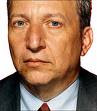 the Economic Club (of New York, I think) on 4/9. It SO reminds me of my undergrad days at Harvard in the 1960's and the smoke and mirrors political discussions that routinely marginalized outsider views as "generating more heat than light". (Anyone else remember this phrase?) This cozy CNBC clip suggests that the old boys' network is still in fine working order today, its nexus having merely migrated northwards to Cambridge from New Haven, from whence an unbroken string of Yale graduates (Bush/Clinton/Bush) had occupied the White House for an unprecedented 20 years. (My take on the historic "Yale succession" of U.S. Presidents is here, here, here and here.)
Well, I'm getting carried away. But seriously: are video clips like this one the best that CNBC - and Summers himself - can give the American people at this critical juncture in our history?
Well I gotta rant a bit more. Just listen to the long-winded introduction (suckup?) that consumes the first two minutes of this nine-minute clip, including the moderator's paean to Summer's astounding skills as a tennis player - "his greatest talent," says the host, confessing his own need for professional training in order to beat Summers - "barely" - on a doubles court. Please. This idle talk only assures Summers that he is among friends and will not be asked any hard questions (say, about bank solvency or bank spending of government bailout money). And the warm audience response to his not-so-witty dismissal of any claim to certainty in the making of economic forecasts confirms that none are expected. I decided to scout the web a bit on this man, focusing on his ties to Wall Street. It didn't take to find a couple interesting items:
 the Economic Club (of New York, I think) on 4/9. It SO reminds me of my undergrad days at Harvard in the 1960's and the smoke and mirrors political discussions that routinely marginalized outsider views as "generating more heat than light". (Anyone else remember this phrase?) This cozy CNBC clip suggests that the old boys' network is still in fine working order today, its nexus having merely migrated northwards to Cambridge from New Haven, from whence an unbroken string of Yale graduates (Bush/Clinton/Bush) had occupied the White House for an unprecedented 20 years. (My take on the historic "Yale succession" of U.S. Presidents is here, here, here and here.)
Well, I'm getting carried away. But seriously: are video clips like this one the best that CNBC - and Summers himself - can give the American people at this critical juncture in our history?
Well I gotta rant a bit more. Just listen to the long-winded introduction (suckup?) that consumes the first two minutes of this nine-minute clip, including the moderator's paean to Summer's astounding skills as a tennis player - "his greatest talent," says the host, confessing his own need for professional training in order to beat Summers - "barely" - on a doubles court. Please. This idle talk only assures Summers that he is among friends and will not be asked any hard questions (say, about bank solvency or bank spending of government bailout money). And the warm audience response to his not-so-witty dismissal of any claim to certainty in the making of economic forecasts confirms that none are expected. I decided to scout the web a bit on this man, focusing on his ties to Wall Street. It didn't take to find a couple interesting items:
- At Econospeak (via Naked Capitalism) I found this glowing account of Summers' "stadium rock concert" and "performance art" presentation last year to Goldman Sachs. Smoke and Mirrors? For sure, it was patently a magic show. Genius? One of the greatest minds of the past 500 years? That was the take of one Monique, a Goldman employee who says “It was his entertainment that opened me up and made me receptive, but the economic vision was irreplaceable. I thought I was maximizing wealth before I heard Larry, but I didn’t know the half of it.” Maximizing wealth, huh? Whose? (4/4)
- Well, consider this. The New York Times reports that "Lawrence H. Summers, the top economic adviser to President Obama, earned more than $5 million last year from the hedge fund D. E. Shaw and collected $2.7 million in speaking fees from Wall Street companies that received government bailout money, the White House disclosed Friday in releasing financial information about top officials." OK, so Summers, as Treasury Secretary, isn't pulling in the big bucks from Wall Street. But whose wealth he is maximizing? And who is benefitting from his great wisdom? So far, it's still going to Wall Street while the Americian people, on CNBS, get jargon. (4/3)
Thursday, April 9, 2009
CNBC's Rick Santelli Fires off on the Solvency/Liquidity Issue
A good moment yesterday morning for the Great Santelli on CNBC's Squawkbox. Here it is. At 1:40 of the segment, which opens with Carl Quintanilla interviewing Umrai Gill, Santelli waves a paper and says he wants to take note of a recent white paper written by Harvard and Princeton economists Joshua Coval, Jakub Jurek and Erik Stafford. The conclusion he reads, how ever, is not from the Coval/Jurek/Stafford paper. It's from an article about the paper by John Carney of Business Insider. Carney writes (and Rick reads, revising the last sentence):
 ever, is not from the Coval/Jurek/Stafford paper. It's from an article about the paper by John Carney of Business Insider. Carney writes (and Rick reads, revising the last sentence):
In short, the government cannot save the banks by improving liquidity or changing mark to market rules because the problem isn't illiquidity or accounting. The problem is that highly leveraged financial firms own assets that are worth far less than they thought they would be, and the firms are insolvent as a result. This is why the latest bailout plans secretly give huge subsidies to banks--because the only way to keep the insolvent zombies afloat is to transfer billions of dollars to banks, bank stockholders, and bank creditors.This caught my attention. Umrai Gill's rejoinder to Santelli did too.
Saturday, April 4, 2009
Is Massive, truly MASSIVE, Bank Fraud going Unpunished and Unregulated?
Is America ignoring bank fraud on an unprecedented scale in its haste to bail out its apparently insolvent banks? This 20 minute Bill Moyers Journal video makes a strong case for the affirmative. Moyers interviews William K. Black, a senior regulator during the Savings and Loan Crisis of the 1990's. Black's take on the decay of American finance over the past 20 years reminds me of David Cay Johnston's take on the decay of the IRS since 1980. Two straight shooters. Black is hard on Geithner and Summers and on President Obama too. A key passage:
The FBI publicly warned, in September 2004 that there was an epidemic of mortgage fraud, that if it was allowed to continue it would produce a crisis at least as large as the Savings and Loan debacle. And that they were going to make sure that they didn't let that happen. So what goes wrong? After 9/11, the attacks, the Justice Department transfers 500 white-collar specialists in the FBI to national terrorism. Well, we can all understand that. But then, the Bush administration refused to replace the missing 500 agents. So even today, again, as you say, this crisis is 1000 times worse, perhaps, certainly 100 times worse, than the Savings and Loan crisis. There are one-fifth as many FBI agents as worked the Savings and Loan crisis.So what needs to be done? Here's Black's 9/08 Nation article co-authored with economist James K. Galbraith. Here are some related links:
- Tim Geithner outlines his regulatory plan before the House Committee on Financial Regulation (3/??)
- President Obama backs up Geithner's plan (3/24)
- The Economist says "The rich are an easy target. But when you try to bash them, you usually end up punching yourself in the nose." Seems to me this caution against political retribution skirts the hard issues of legal accountability and regulatory reform. (4/2)
- Meredith Whitney says that the country's biggest banks, still undercapitalized despite government efforts to refloat them, are reducing credit card lines and thereby "sucking liquidity out of consumer wallets." How much? "In the fourth quarter alone," she says, "half a trillion dollars of lines were cut from the consumer--half a trillion." (4/6)
- Mike Mayo's "Seven Deadly Sins of Banking" is out today - David Faber and others at CNBC blame today's down market (Dow -114 several hours before the close) in part on Mayo's report.
- William D Cohan on how Goldman Sachs emerged as the king of financial institutions (NYT op ed. Not fraud, but sleight of hand ( 4/15)
Wednesday, April 1, 2009
CNBC Highlights London Public Protests
It sure isn't civic media - it's not giving the public anything like a direct and informed voice in defining and solving the world's financial woes - but CNBC videos are giving the public a powerful voice of sorts as the G20 summit prepares to open in London. We'll be seeing these videos all day long. We haven't seen videos like this since the 1999 WTO Protests in Seattle. These protests has a positive outcome: they helped empower underdeveloped nations worldwide to find alternatives to the counterproductive programs of the International Monetary Fund. On the other hand, these videos can backfire. Recall network TV coverage of the 1968 Democratic National Convention riots in Chicago and the resulting voter backlash against the "hippy" student protesters. This backlash plucked the presidency from the grasp of Hubert Humphrey and handed it to Richard Nixon. Recall also the riots in 110 American cities following the assassination of Rev. King.
Are street protests the best or only way for Americans to let off steam or outrage? Why aren't American media doing a better job of helping the American people think as a nation? That's what a true civic media can do.
Are street protests the best or only way for Americans to let off steam or outrage? Why aren't American media doing a better job of helping the American people think as a nation? That's what a true civic media can do.
Monday, March 23, 2009
Geithner Releases Public/Private Investment Partnership, Dow Soars 497
Feels like springtime in Obamaland today! Markets worldwide responded favorably to the Tim Geithner's Public/Private Investment Partnership to restore solvency in America's too-big-to-fail banks. But will his plan, in its author's words, get "our financial system back to the business of providing credit to working families and viable businesses, and help prevent future crises?" Here's a running list of responses PRO, CON and NEUTRAL John Authers asks an underlieing question about bank solvency (3/23) Bill Gross buys in (3/23 CNBC video)
Paul Krugman all but despairs over the Geithner plan (3/23)
Clive Crook asks Krugman to think twice (3/23)
Tim Geithner argues that his plan is "part of an overall strategy to resolve the crisis as quickly and effectively as possible at least cost to the taxpayer. " (3/23) Yves Smith, riffing off a WSJ editorial, talks about Fed rescue plan exit strategies (3/23)
Mike Whitney protests the Geithner plan's 5%/95% public/private investor ratio (3/23)
Felix Salmon warns that the plan is yet another "thing-that-has-to-go right in order . . . to work." (3/23) Wall Street Journal says the plan "isn't the worst idea the federal government has ever had" (3/24)
"NYT "Opinionator" quotes from five mainstream media takes on the plan (3/24)
NYT "Room For Debate" compares responses to the Geithner plan of Krugman, Simon Johnson, Brad DeLong, Mark Thoma (3/24)
Mike Hudson takes a broad 3,000 year view to today's financial crisis in this 10 minute video (2/20). Here's his indispensable 2006 Harper's cover story, "The New Road to Serfdom: an Illustrated Guide to the Coming Real Estate Collapse"
New York Times voices doubts about the Geithner plan (3/24)
Joseph Stiglitz says the plan robs the taxpayer (3/24) Martin Wolf says an adequate rescue plan is still far away (3/24) Czech President of the European Union calls the plan "A way to hell". Also, Financial Times (3/25)
Rick Santelli of CNBC asks protests "two years" of government neglect of Nouriel Roubini's warnings about dangers of government exacerbation/funding of the credit bubble. (Go to 7:30 of this 10 minute February Durable Goods Report (Alt. link: http://www.cnbc.com/id/15840232?video=1072009974&play=1. s ) (3/25)
London Economist sits on the fence (3/25) Nouriel Roubini, "Dr. Doom," sees POSITIVES in the plan! (3/25) Lee Brodie, of CNBC's Fast Money crew, says Geithner may have rescued America (3/25) New York Post reporter Mark DeCambre says Geithner plan lets City and B of A "buy back laundered loans at lower rates" (3/25) Yves Smith, finance blogger, approves Willem Buiter of F.T. taking "Fed and Treasury to Task" (3/26)
Steve Waldman, finance writer, critique New Yorker finance writer James Surowiecki (scroll down to 3/25)
Investor's Business Daily, citing Friedrich Hayek, warns against government (bureaucrat) control of the economy (3/27) Nouriel Roubini in this 20 min. Bloomberg TV interview says the plan "won't stop bank nationalizations" (3/28) Newsweek article says Treasury Secretary Geithner is "hitting his stride" (3/28)
Newsweek Cover Story says the White House is ignoring Paul Krugman's criticisms of the Geithner plan (3/28) Jeffrey Sachs, Yale economist, asks "Will Geithner and Summers Succeed in Raiding the FDIC and Fed?" Mike Whitney, finance writer, citing DeCambre, Sachs and Stiglitz says "the country will undergo the greatest period of bank consolidation in its 230 year history." New York Times charges Congress with "bipartisan resistance to a thorough investigation of what caused the collapse" (3/29) Richard Posner, U.C. Law and jurist, says the Geithner plan "will simplify the banks' balance sheets by removing assets of uncertain value and replacing them with cash (3/29)
Gary Becker, U.C economist and Nobelist, says "it is a strange program indeed where banks get subsidized in proportion to how many 'bad' assets they hold." (3/31) Joseph Stiglitz, Nobelist, says government overleveraging replicates the bank overleveraging that caused the meltdown.(4/1) Jonathan Weil , Bloomberg, "Obama Stakes His Fortunes on Failed Banksters" (4/9) Mike Whitney examines the recent report on the Geithner bank rescue plan released by the Congressional Oversight Committee chaired by Elizabeth Warren.(4/11)
Jeff Cox at CNBC.com says "Flood of US Debt Threatens To 'Crowd Out' Other Borrowers" (4/13) Financial Times Tarp investigator seeks evidence of book fiddling (4/13) Nouriel Roubini coming on strong for the first time in several weeks, says "Testing the Stress Test Scenarios: Actual Macro Data Are Already Worse than the More Adverse Scenario for 2009 in the Stress Tests. So the Stress Tests Fail the Basic Criterion of Reality Check Even Before They Are Concluded" (4/13) Elizabeth Warren, Harvard Professor and Chair of the Congressional Oversight Committee, is interviewed by John Daley at Comedy Central (4/15)
Simon Johnson, MIT economist and former chief economist for the International Monetary Fund, argues in the Atlantic Monthly that "the financial industry has effectively captured our government" and that "recovery will fail unless we break the financial oligarchy that is blocking essential reform" (5/09) Geithner Testimony arguing for bank stability sparks Wall Street rally (4/21).
Subscribe to:
Posts (Atom)
Hmmm..."strength in traditional banking?" Who is borrowing that money and making their interest and principal payments on time? Has there been a bunch of businesses started no one is aware of yet? Are existing businesses expanding? You've got to be kidding me.
"strong capital markets activities." Where is this revenue coming from? Any big equity IPO's during Q1 that we missed? Corporate debt issuance was occurring, but at a very low rate and Wells Fargo is not a real player in that business. Mortgage securitizaton? I'm not aware of any. Please explain to me, Mr. Atkins, the source of your "strong capital markets acitivities."
"exceptionally strong mortgage banking results." This one is the most puzzling and troubling to me. We know, with hard data and facts, that home sales and mortgage issuance is plummeting every day. Where are the revenues coming from in this area? Mr. Marks goes on to cite that WFC's acquisition of Wachovia boosted their results. How on Earth can this be? Wachovia's balance sheet is mostly the kinds of subprime mortgage assets that are melting down to zero.
The only possible source of extraordinary revenues I can think of for WFC during Q1 would have been WFC's use of the massive amount of Treasury and Fed money extended to banks at little or no cost and being put to work in Treasury bonds and WFC earning the positive interest carry.
In fact, we know from hard data released every week that the very business activities that Wells says are creating massive profits are, in fact, melting down quickly in every corner of the U.S. and global economy.
For WFC to come out and make those claims is beyond fairy tale - it's outright fraud. And lest we forget, the beloved Warren Buffet owns over 10% of WFC, and thus de facto is standing behind this massive fraud. George Orwell is laughing uncontrollably in his grave now.